
Video telematics: from documentation to prevention.
ADAS and DMS warn the driver before an incident happens. If something does happen, frameLOGIC Video has it on record: 1080p footage and driving data for the event. Start with a single dash cam and extend the set as the operation requires.
Two recordings, two disputes. Who pays for the damage?
Watch the clip and judge for yourself how these situations would look without the recording.
Recording 1 Van cuts in

Without the recording it looks like a rear-end collision. Who pays?
The front of the truck hits the van. If the other party acts in bad faith, the blame falls on your driver.
The van pulls out of the car park and cuts in right in front of the cab. The driver had no chance of avoiding the collision.
Conclusion: the dispute is settled by the footage, not by competing statements.
Recording 2 Barrier at the exit

The truck damaged the barrier. Or did it?
The barrier arm is damaged and the truck is standing in the gateway. Without the recording, the case looks clear.
The barrier comes down on a vehicle that is already moving. The damage is real, but the driver did not cause it.
Conclusion: the recording protects the driver from blame and the company from the cost of damage it did not cause.
The full picture: before, during, and after the event.
frameLOGIC Video records what actually happened. Cameras capture 1080p footage; the built-in GPS and accelerometer add location and driving-style context to every clip. Recordings upload to the frameLOGIC cloud over 4G, so a disputed incident can be reviewed and downloaded remotely, with no waiting for the vehicle to return to base. Footage also stays on the device card as a fallback if connectivity drops. The same platform runs a single truck dash cam or a multi-camera setup. The hardware specification for each tier is further down this page.
Book a demo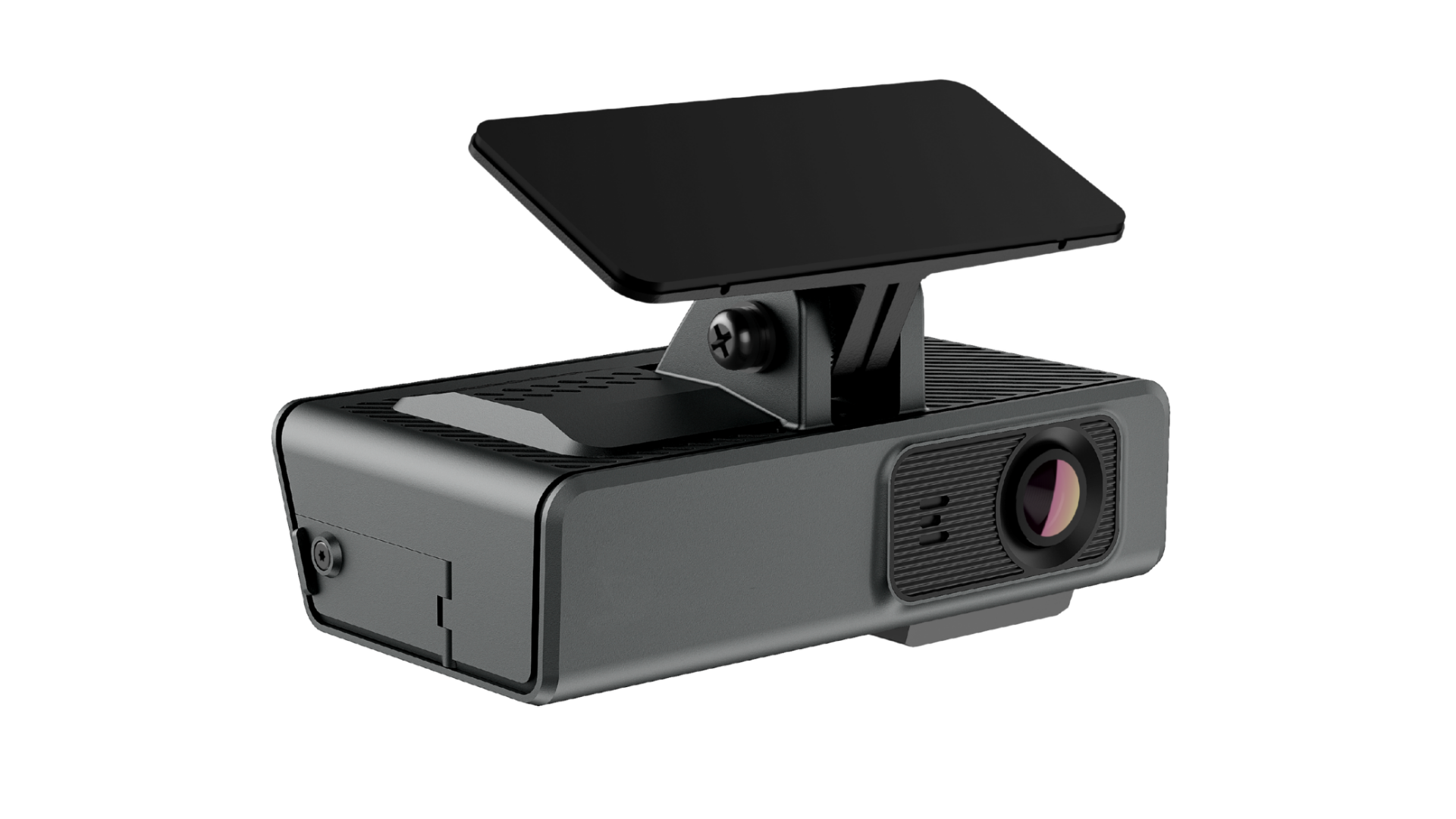
Two camera packages: from event recording to active prevention
-
Video Flex
An affordable, easy-install dash cam. ADAS is optional and DMS can be added later, and the set extends by one further camera, a side camera for instance. A sensible entry point for fleets that mainly need footage of events.
-
Video Plus
ADAS and DMS built in, with audio and visual alerts in the cab. It supports up to two further cameras: add a rear camera, or swap the driver sensor for two side cameras. The tier for fleets that want to prevent incidents, not just document them.
What video telematics changes
- 01
Fewer incidents
ADAS and DMS alerts warn the driver about forward collisions, insufficient headway, pedestrians, fatigue and phone use while there is still time to react.
- 02
Safer driving through individual coaching
Safety scores and event clips show which behaviours actually generate risk, so coaching works on real situations and recurring patterns.
- 03
Protection against unjustified claims
1080p footage with GPS and accelerometer data documents each incident with time and place. A disputed claim is settled on the recording rather than one account against another, which also clears the driver of unfounded blame.
Harsh braking is not always a mistake. Only the recording shows the context.


Conclusion: the sensor logs both as harsh-braking events. Only the video shows which one deserves praise and which one needs discussing with the driver.
Not every driver needs your attention. You can see at once who to talk to, and about what.
Click a driver's row to see what the score is made of.
- Fatigue (DMS) 6
- Phone use (DMS) 2
- Harsh braking 2
Fatigue is repeatedly detected on the same night runs. Discuss three clips from the past week and the break schedule.
- Phone use (DMS) 4
- Following too closely (ADAS) 3
- Distraction (DMS) 2
Phone use while driving, mostly in town. Discuss two clips and the rules for contacting the dispatch team.
- Following too closely (ADAS) 4
- Harsh braking 2
- Forward collision risk (ADAS) 1
Following too closely on the open road. One clip shows how little time is left to react.
- Harsh braking 1
The recording of the single harsh-braking event shows a bus in the truck's lane. Praise the driver's response.
Only fleet management can see the Safety Score. We recommend using it as a starting point for a discussion with the driver, not as a basis for bonuses or penalties.
Conclusion: targeted action with individual drivers, before any damage is done.
The functions that run inside the packages
-
ADAS
Advanced Driver Assistance analyses the road ahead. Forward-collision, following-distance and pedestrian warnings give the driver additional time to react. The function is available in Video Flex as an over-the-air add-on and is standard in Video Plus.
-
DMS
Driver Monitoring detects fatigue, phone use, smoking, and distraction, then warns the driver in-cab. The sensor is single-lens and aimed at the driver only rather than the whole cabin, which is why fatigue detection reaches 95% accuracy against roughly 65% for wide-angle cabin cameras. An add-on with a driver sensor in Video Flex, standard in Video Plus.
Compare Video Flex and Video Plus
| Feature | Video Flex | Video Plus |
|---|---|---|
| Live GPS tracking | ✓ | ✓ |
| Automatic event detection and alerting | ✓ | ✓ |
| Remote footage access (view and download) | ✓ | ✓ |
| Driver behaviour analytics | ✓ | ✓ |
| Safety Score (base + ADAS/DMS events) | ✓ | ✓ |
| Driver coaching module | ✓ | ✓ |
| Live and historical streaming | + | ✓ |
| 4G connectivity | ✓ | ✓ |
| frameLOGIC cloud platform | ✓ | ✓ |
| ADAS (forward collision, pedestrians) | + | ✓ |
| DMS (fatigue, distraction, phone, smoking) | + | ✓ |
| In-cab audio alerts and coaching | + | ✓ |
| In-cab visual alerts and coaching | – | ✓ |
| Extension with further cameras | + 1 | up to + 2 |
In Video Flex, ADAS and DMS can be added later and work at the basic level: basic ADAS is enabled over the air, DMS with the additional sensor. Video Plus brings both as standard and at the advanced level, where ADAS adds a headway warning and DMS adds advanced fatigue detection.
The hardware inside the packages
-
Field of view and image
All cameras record in 1080p with a field of view up to 140° depending on the variant, high-definition night vision, and a tamper notification. The set can be extended with side, rear, and cargo cameras and with the driver sensor.
-
Storage on the device
Video Flex and Video Plus hold 75–150 hours of footage on the device card, configurable. Incident recordings upload to the cloud automatically, so they do not depend on the memory card.
-
Storage on the platform
Event clips stay on the frameLOGIC platform for up to a year. A shorter retention window is set by the operator, and footage deletes automatically once it closes.
-
Connectivity and power
4G LTE Cat-4, automatic upload of events in high resolution, live view and preview streaming. Three power supply options: OBD, FMS, or direct.
-
In the cab
Driver identification from the tachograph card, a panic button, an accelerometer and GPS stamped on every clip, and automatic system health checks that report a camera going dark.
-
Data protection built in
Event-based recording rather than continuous capture, automatic identity blurring for drivers and bystanders, role-based access with every view and download logged, end-to-end encryption, and data centres aligned with ISO 27001.
Video telematics – common questions
- 01
Does in-cab video recording violate driver privacy?
Not when configured properly. Cameras can record on event triggers only, retention windows are set by the operator and footage auto-deletes, and role-based permissions with a full audit log control who views or downloads clips. AI identity blurring masks faces on forward, side, and in-cab views, and DMS analyses the driver's attention state rather than filming the whole cabin. The system can be deployed in compliance with the GDPR, including in regions where continuous in-cab recording is restricted.
- 02
What is the difference between ADAS and DMS?
ADAS (Advanced Driver Assistance Systems) analyses the road and warns about forward collisions, insufficient headway and pedestrians. DMS (Driver Monitoring System) detects signs of fatigue, phone use, smoking and distraction. Video Plus includes both as standard; on Video Flex they are available as add-ons.
- 03
Can we start with a basic dash cam and add ADAS or DMS later?
Yes. Video Flex starts as a straightforward truck dash cam, and both ADAS and DMS activate later as add-ons, with no replacement of the installed system. Many fleets start with event recording, then switch on the prevention features step by step.
- 04
How does remote footage access work?
Each recorder carries a 4G SIM. You view and download clips from the frameLOGIC platform; Video Plus also streams live and historical video. Footage also stays on the device card, so a short loss of connectivity erases nothing. Video review sits in the same platform as fleet management.